
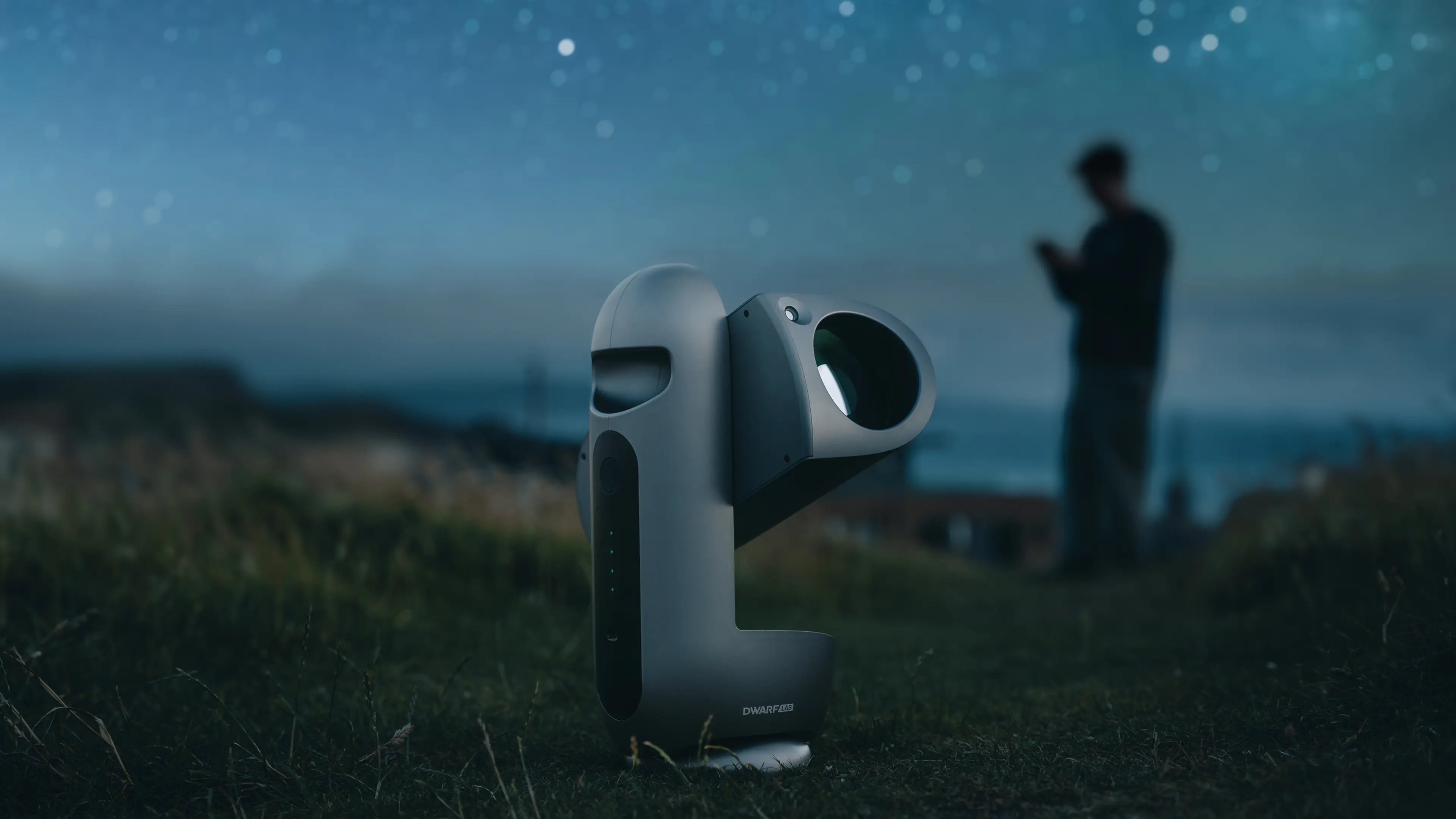
DWARFLAB Draco – an overview of the smart telescope with a 90mm aperture
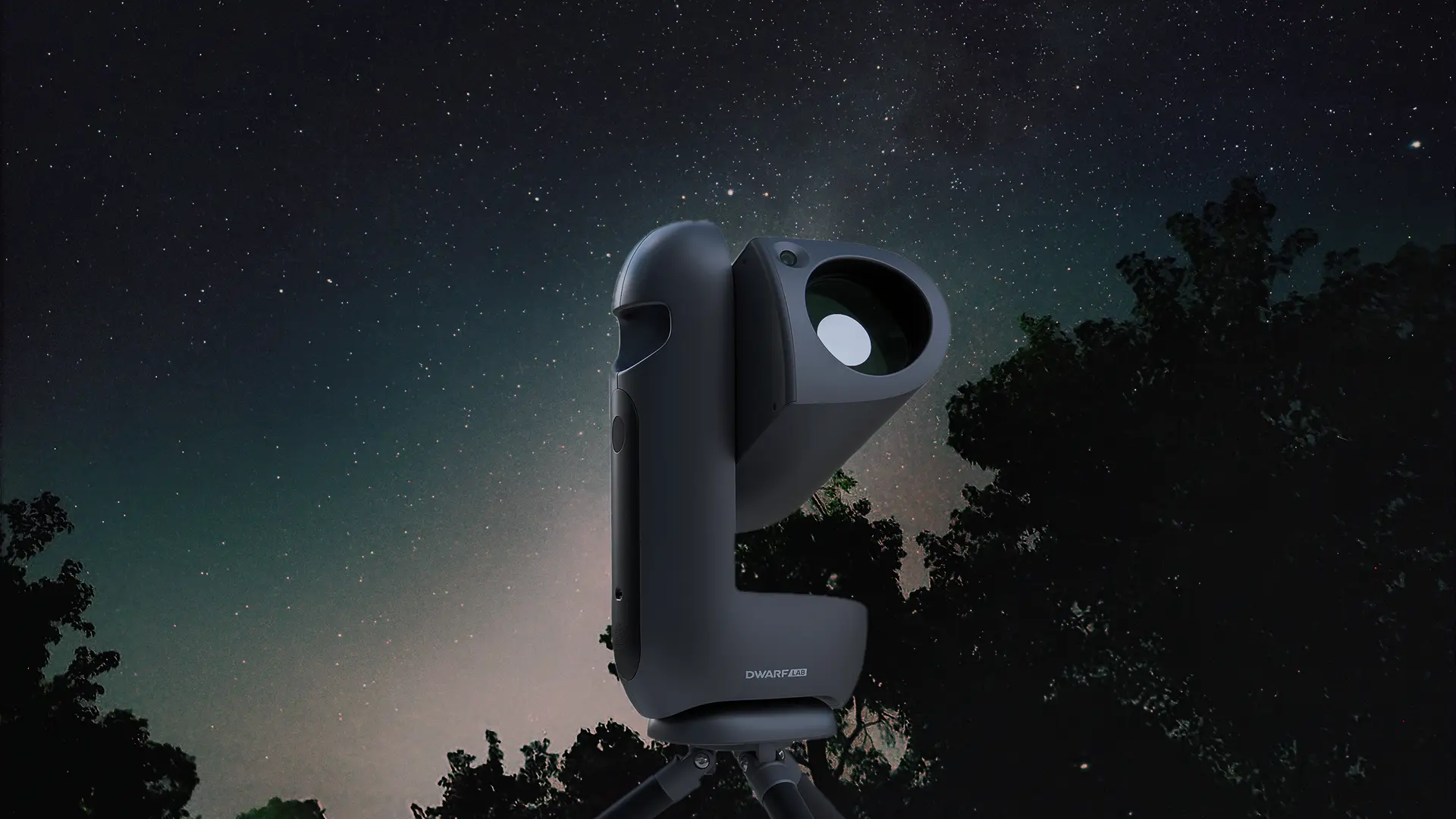
90 mm aperture, f/3.8 and single exposures of up to 300 seconds: the Draco brings the performance of a traditional astrophotography setup into a single, fully automatic device – controlled from your smartphone, with no polar alignment, no laptop and no tangle of cables.
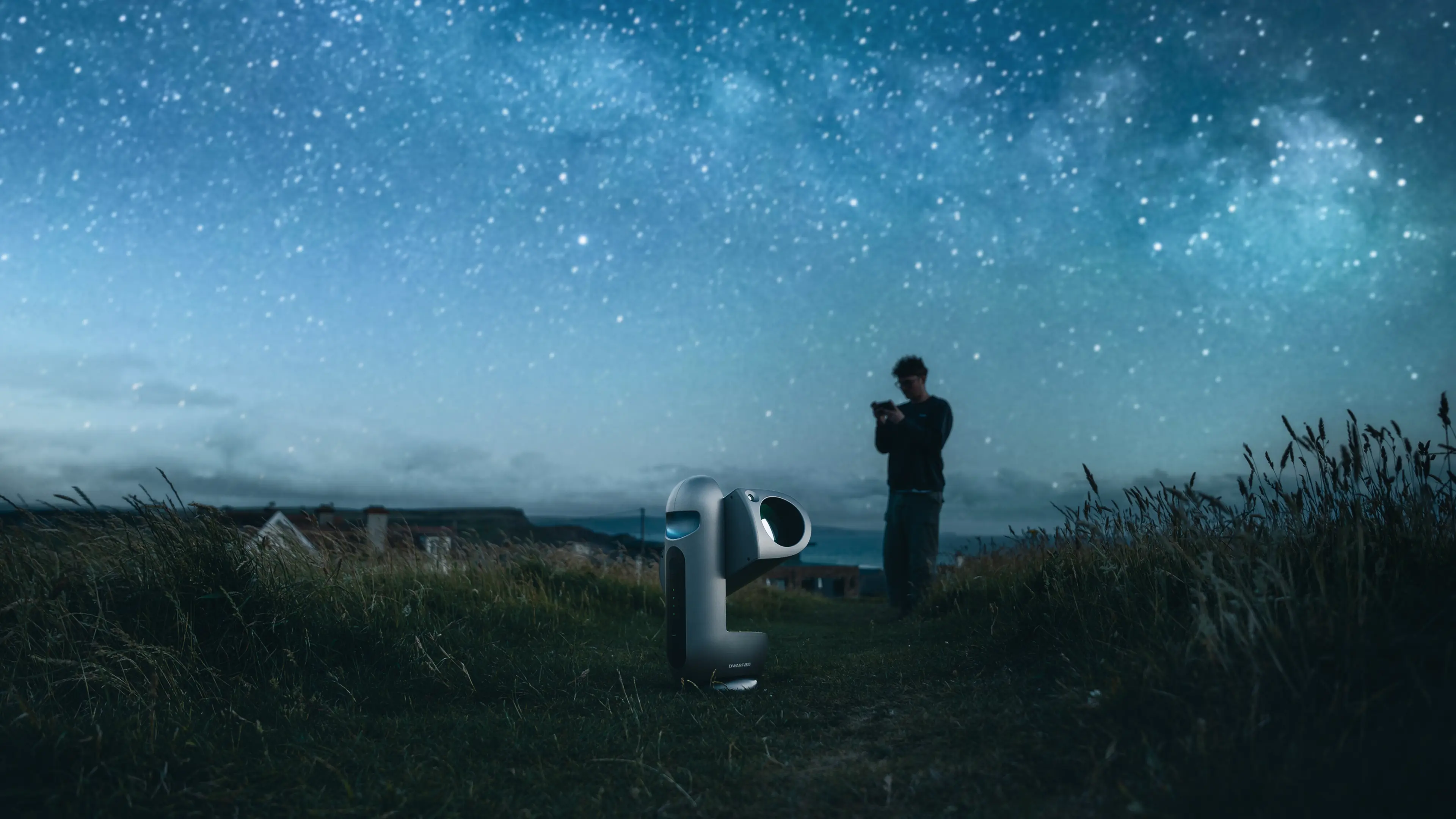
Draco Standard Edition
For galaxies, star clusters, nebulae, the Sun and Moon. With Hα + O III narrowband filter and a built-in solar filter that swings in automatically.
Draco SHO Edition
For nebula photographers: an additional S II + O III filter for the Hubble palette at the touch of a button. Magnetic clip-on solar filter.
At a glance
- 90/340 mm, f/3.8 – folded, colour-corrected optics with around 3 times the light-gathering area of 50 mm smart telescopes
- Two cameras: telephoto with 1/1.3" sensor (50 MP) and ultra-wide-angle with 85.7° field of view
- Single exposures up to 300 s – integrated guide camera and rotating sensor
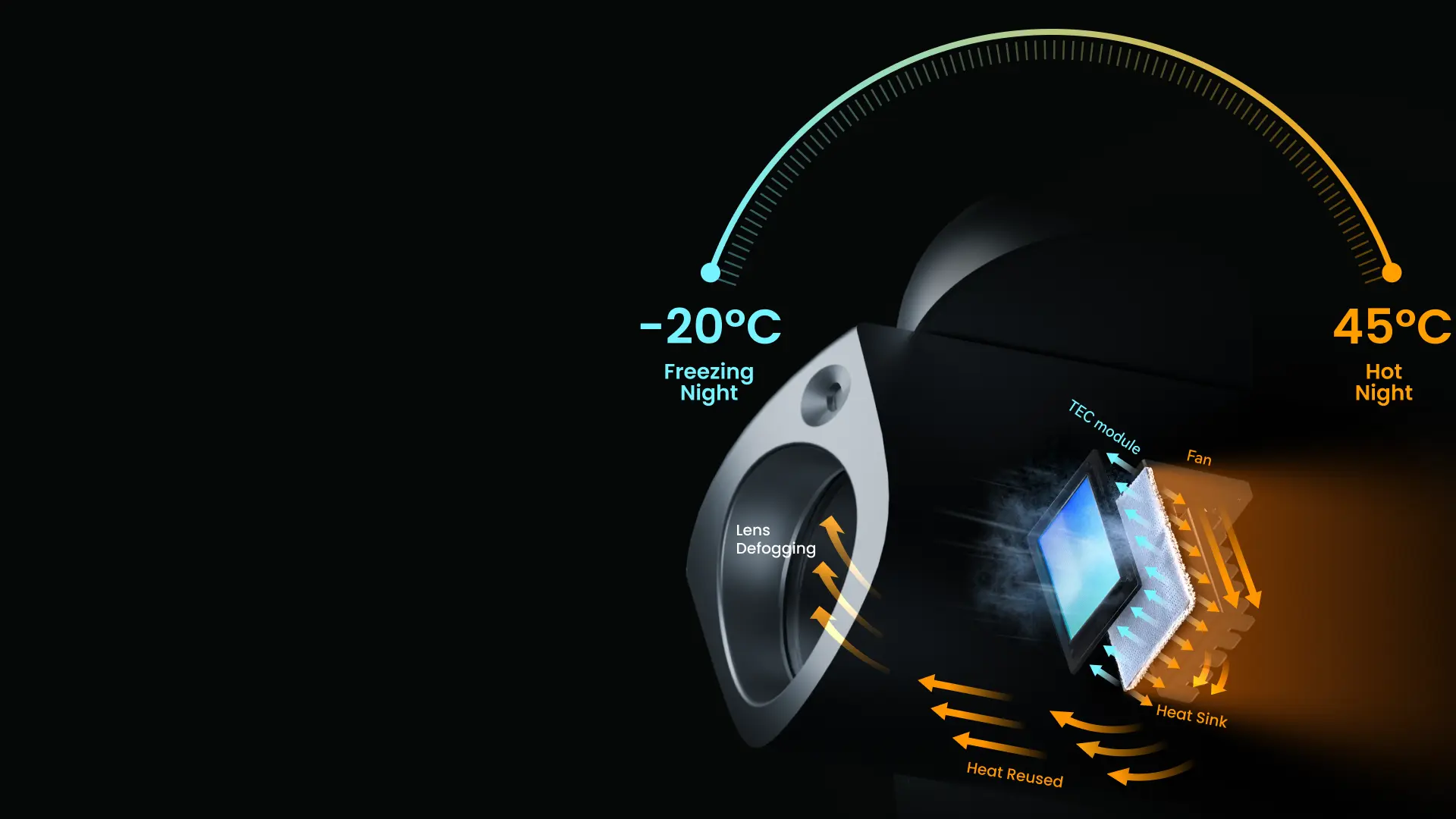
- TEC sensor cooling, dew prevention using waste heat, operating range -20 °C to +45 °C, IP55 rating
- Fully automatic: focusing, alignment, tracking, calibration, stacking
- Remote control, scheduled imaging, mosaics, stacking across several nights
- Included: aluminium tripod and protective case
More aperture – why it matters
A telescope's aperture determines how much light it collects. At 90 mm, the Draco has over 3 times the light-gathering area of the popular 50 mm smart telescopes. Combined with the fast f/3.8 focal ratio, this means the Draco collects considerably more signal in the same time – faint nebula extensions, dust structures and the spiral arms of galaxies emerge faster and with less noise.
At least as important is resolving power: aperture determines how fine a detail a telescope can separate at all. At 90 mm, the Draco resolves almost twice as finely as a 50 mm smart telescope and three times as finely as a 30 mm one. Extended objects such as the Moon, the Sun, galaxies, nebulae and star clusters therefore show considerably finer detail; close double stars are split more cleanly.
The folded optics redirect the light path, fitting a 340 mm focal length into a housing just 386 mm tall.
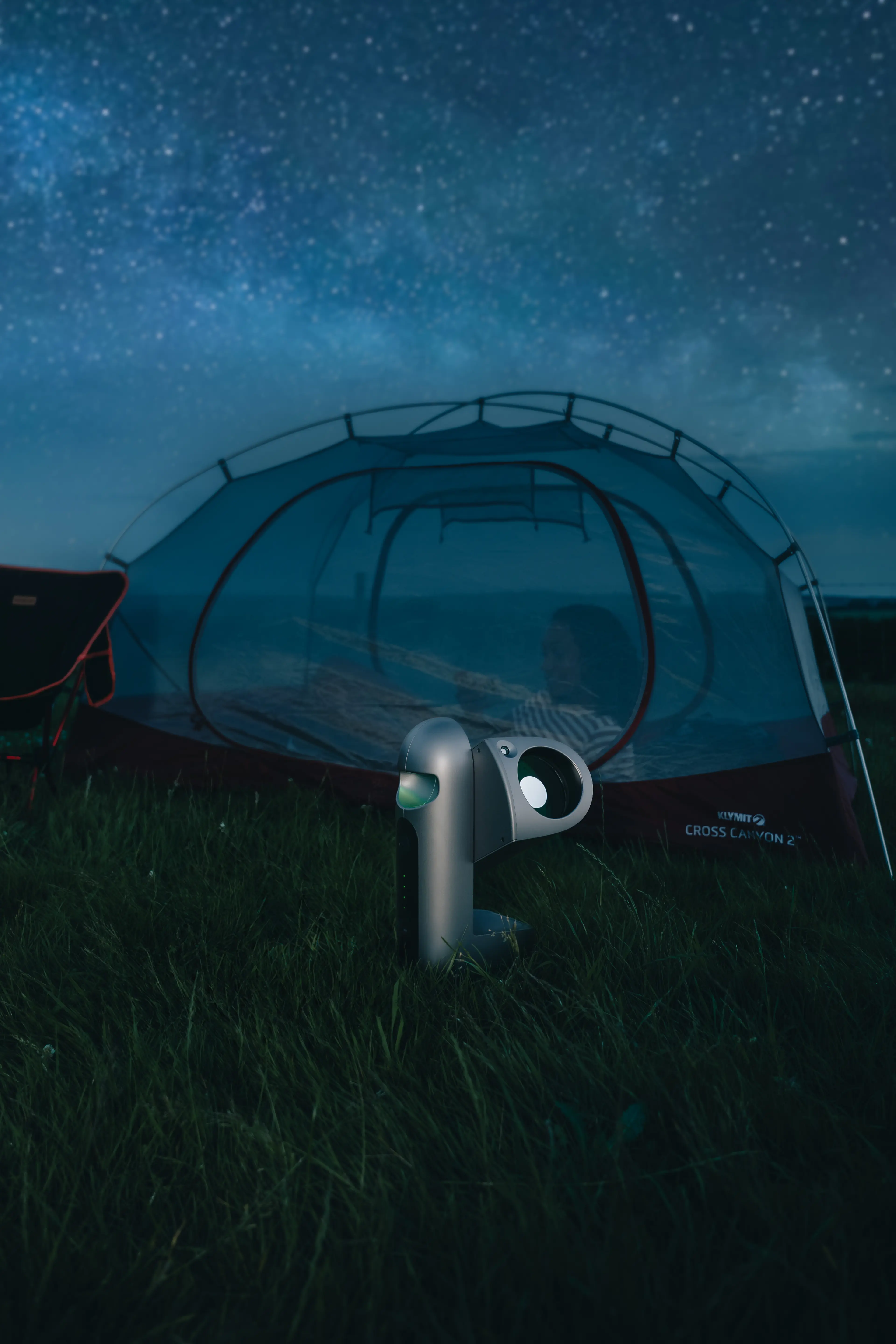
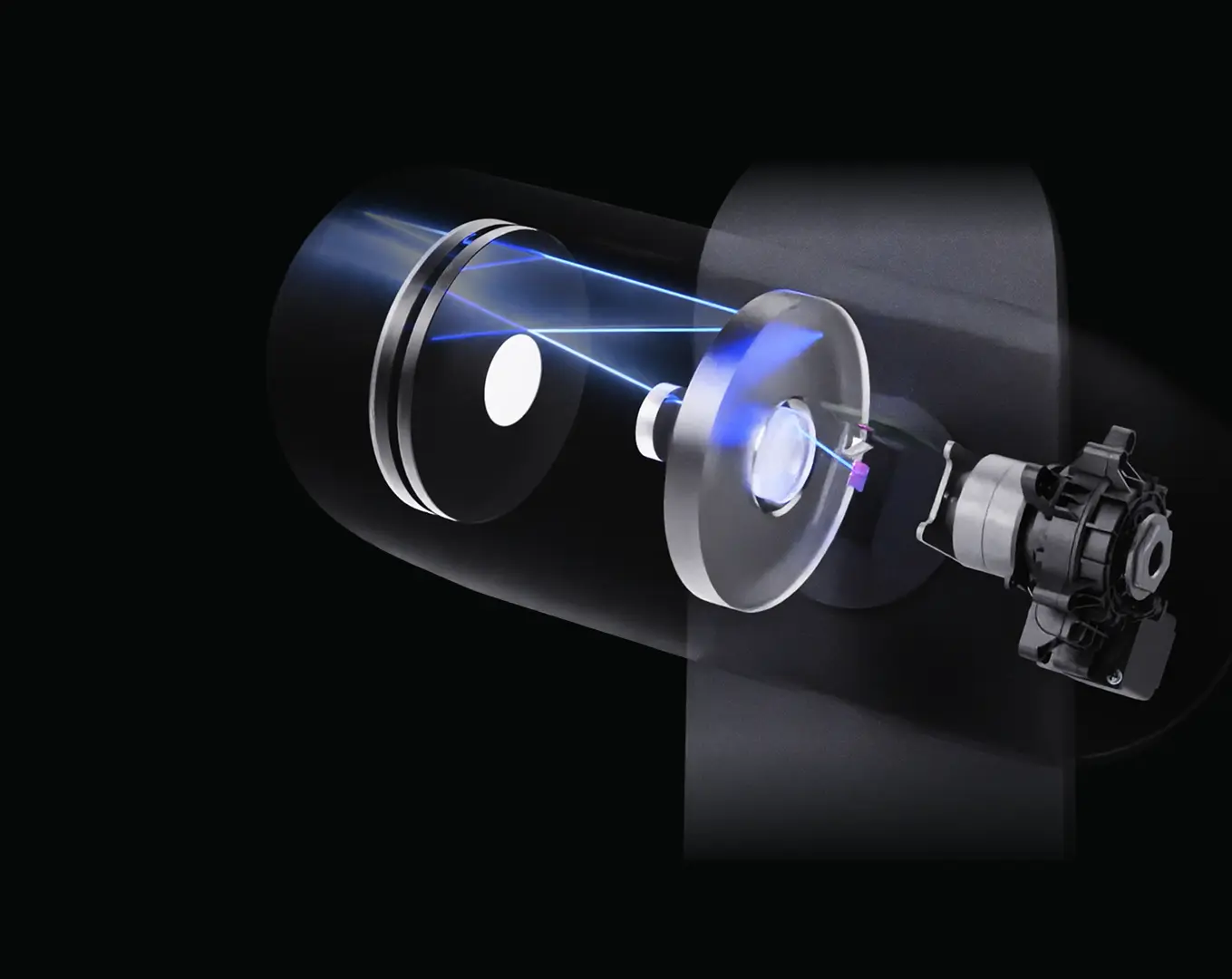
Two cameras, one sky
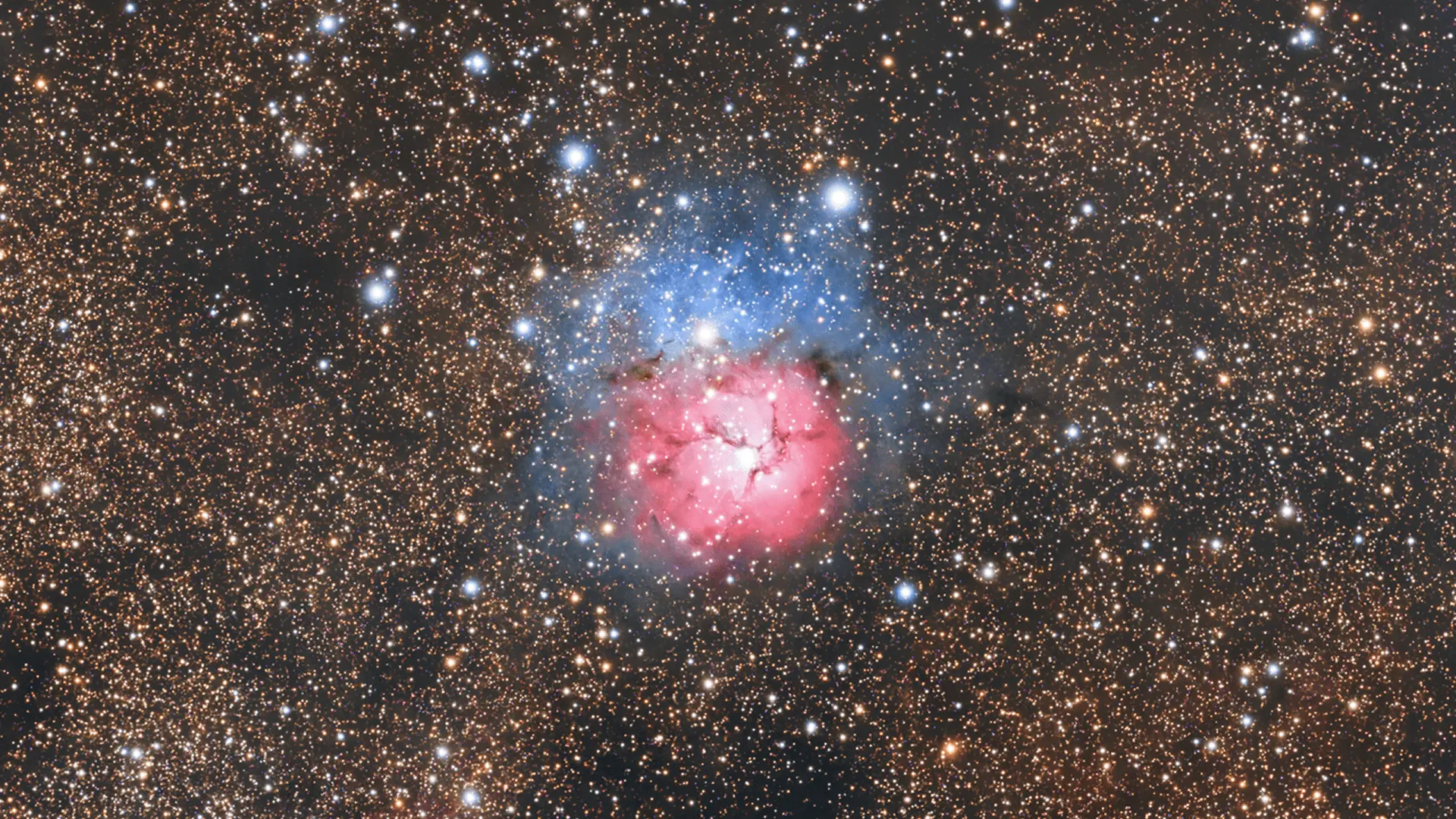
Telephoto camera – 1/1.3" sensor with 50 MP. For deep-sky objects every 4 pixels are combined (2×2 binning), which noticeably reduces noise. For the Sun, Moon and planets the camera uses its full resolution.
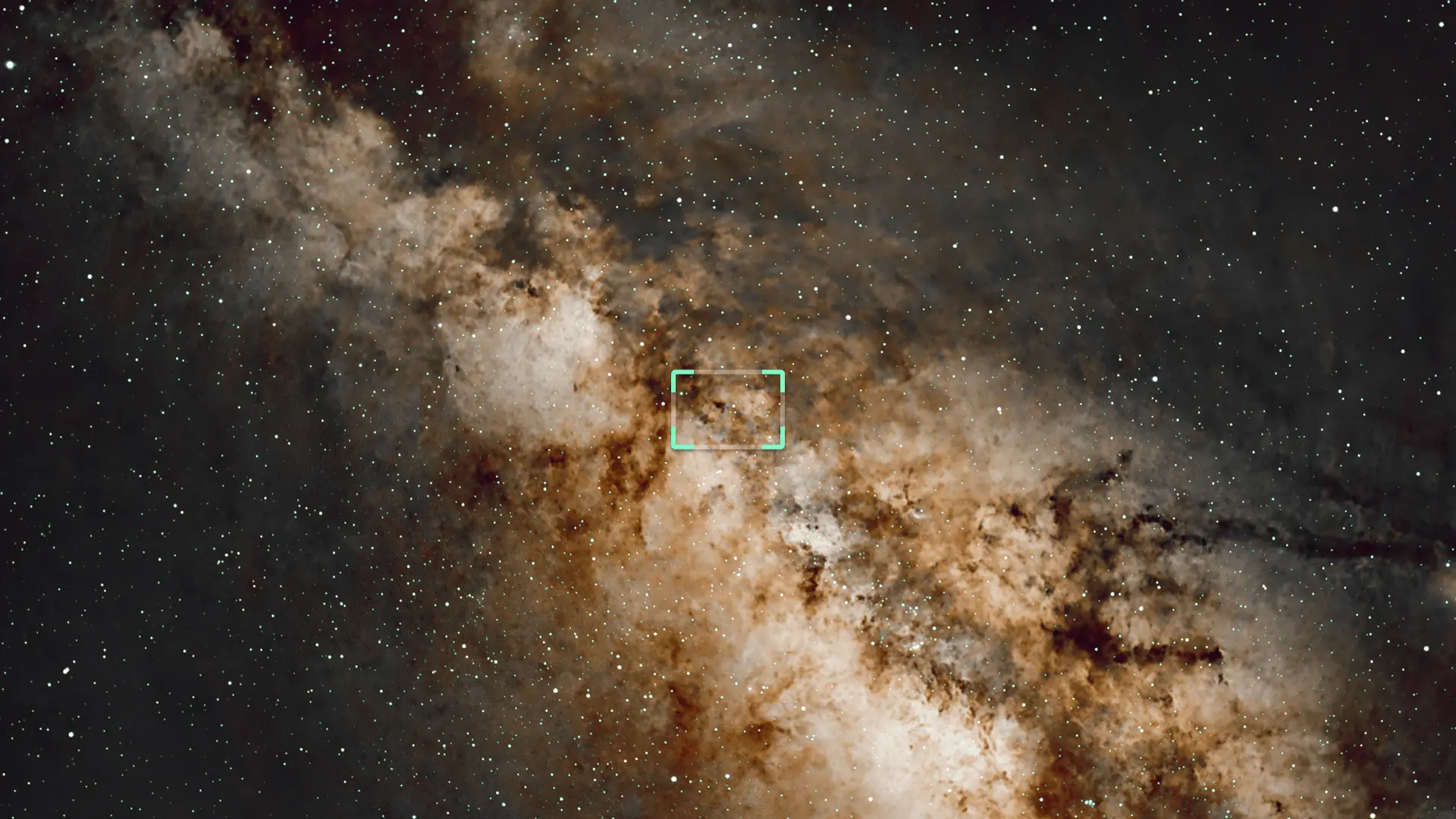
Wide-angle camera – 85.7° field of view for the Milky Way, constellations, time-lapses and landscapes. It runs alongside the telephoto camera: a detailed and a wide view in one night.
300 seconds – long exposures without polar alignment
Smart telescopes usually operate in alt-azimuth mode, i.e. set up level. During the exposure the star field slowly rotates around the centre of the image – which is why many devices only allow single exposures of 10 to 30 seconds. The Draco compensates for this field rotation by physically rotating its sensor. At the same time, an integrated guide camera continuously monitors the stars and corrects the smallest deviations.
The result: single exposures of up to 300 seconds, fewer frames, less read noise – all without polar alignment.
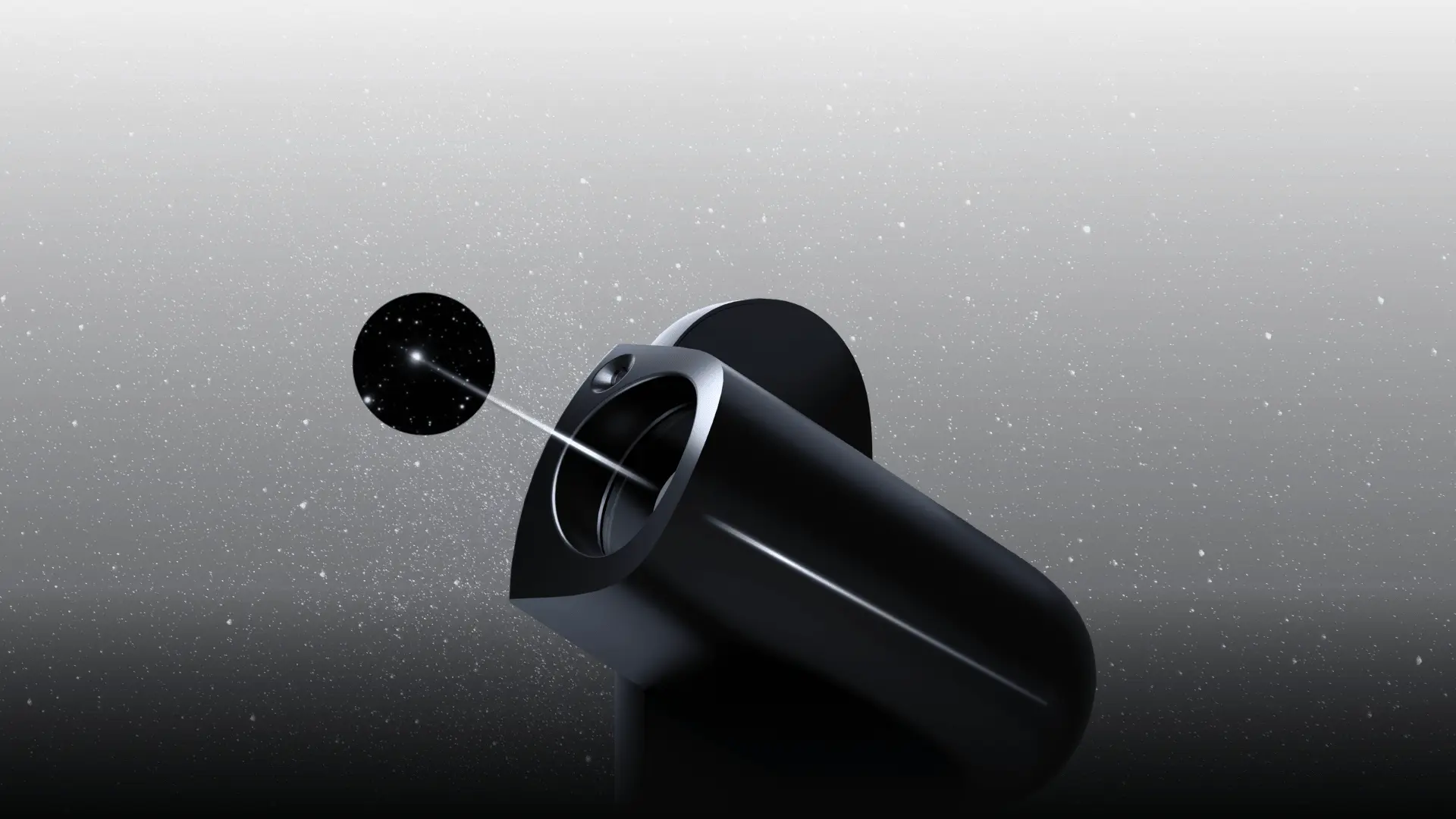
For objects near the zenith, where field rotation is fastest, the Draco can also be operated in equatorial mode. The app guides you through the setup.
TEC sensor cooling and dew prevention
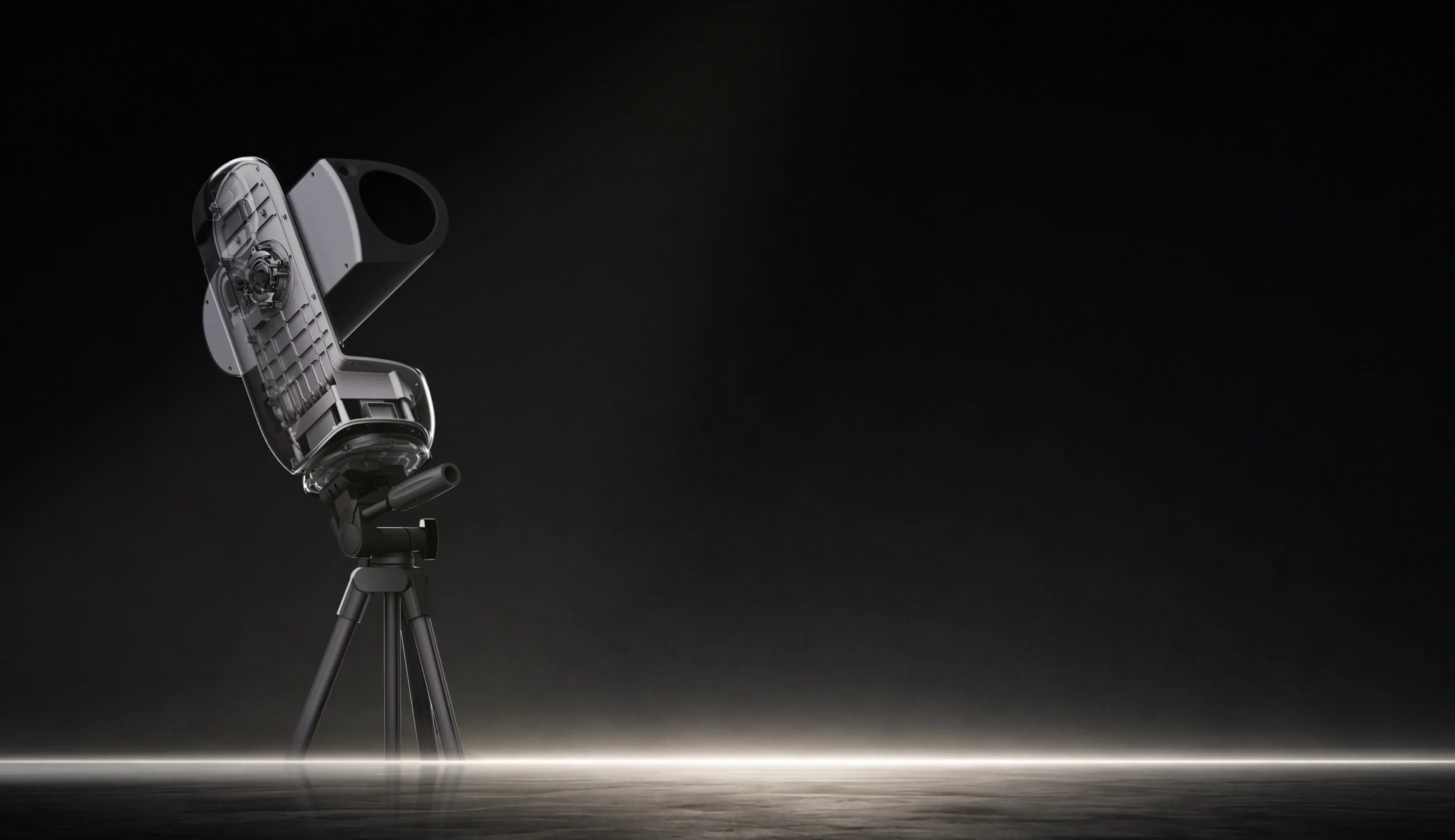
Heat is the enemy of low-noise images. Equipped with a TEC thermoelectric cooler and fan, the Draco features automatic TEC thermal control. It lowers the sensor temperature by approx. 5 °C below ambient, fundamentally reducing thermal noise in long-exposure astrophotography and delivering clean imaging data. The waste heat from the electronics is put to good use: it keeps the lens free of dew – without extra heater bands and cables.
The Draco creates and applies calibration frames (flats, bias, darks) automatically.
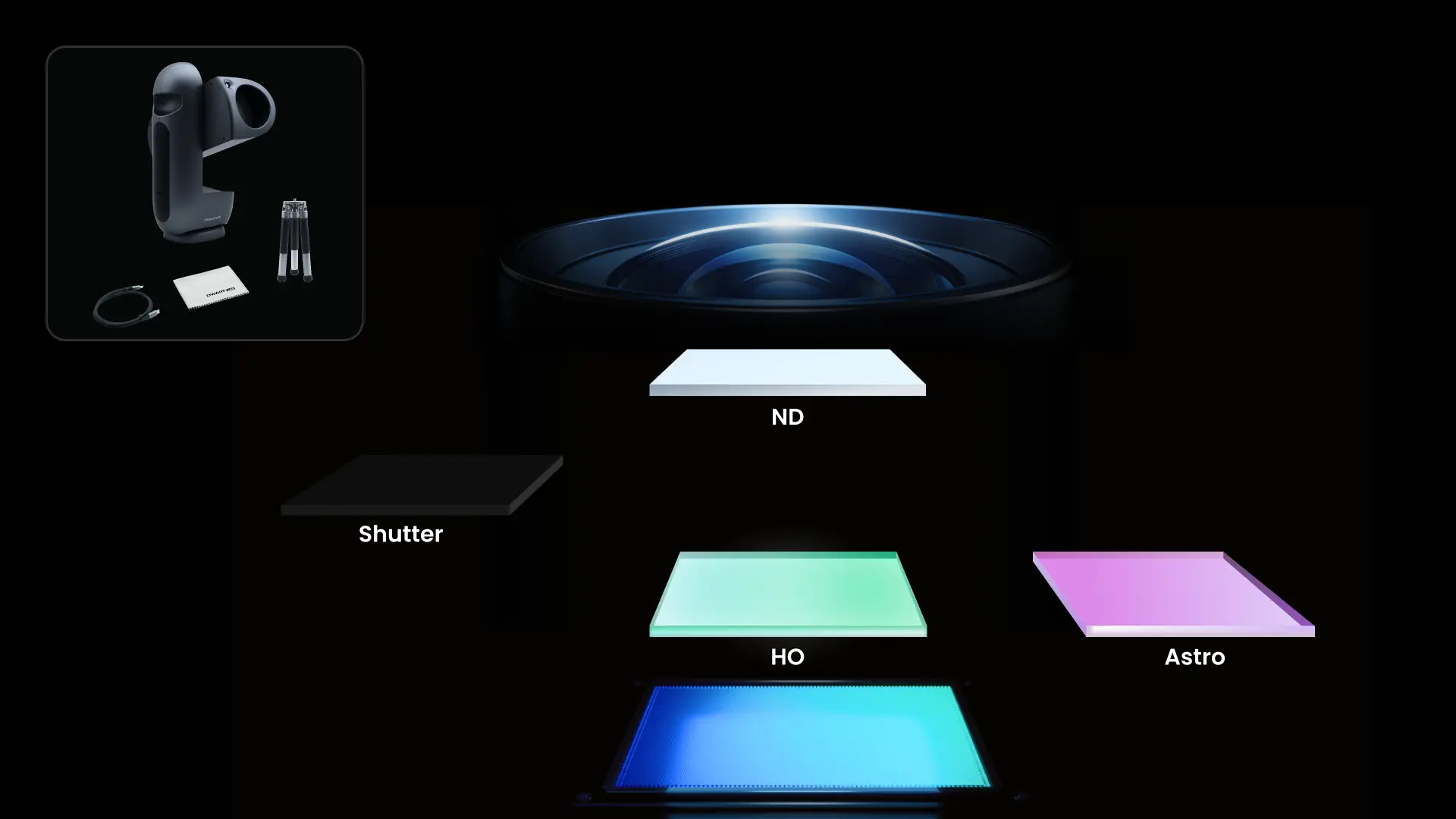
Standard or SHO – which edition is right for you?
Both editions are optically and technically identical. They differ only in their filters:
| Draco Standard Edition | Draco SHO Edition | |
|---|---|---|
| Astro filter (430–690 nm) | ✓ | ✓ |
| Dark shutter | ✓ | ✓ |
| Hα + O III dual narrowband filter | ✓ | ✓ |
| S II + O III dual narrowband filter | – | ✓ |
| Hubble palette (SHO) at the touch of a button | – | ✓ |
| Solar filter | built-in, swings in automatically | magnetic, clip-on |
| Ideal for | galaxies, star clusters, nebulae, regular solar imaging | emission nebulae, supernova remnants, imaging under urban skies |
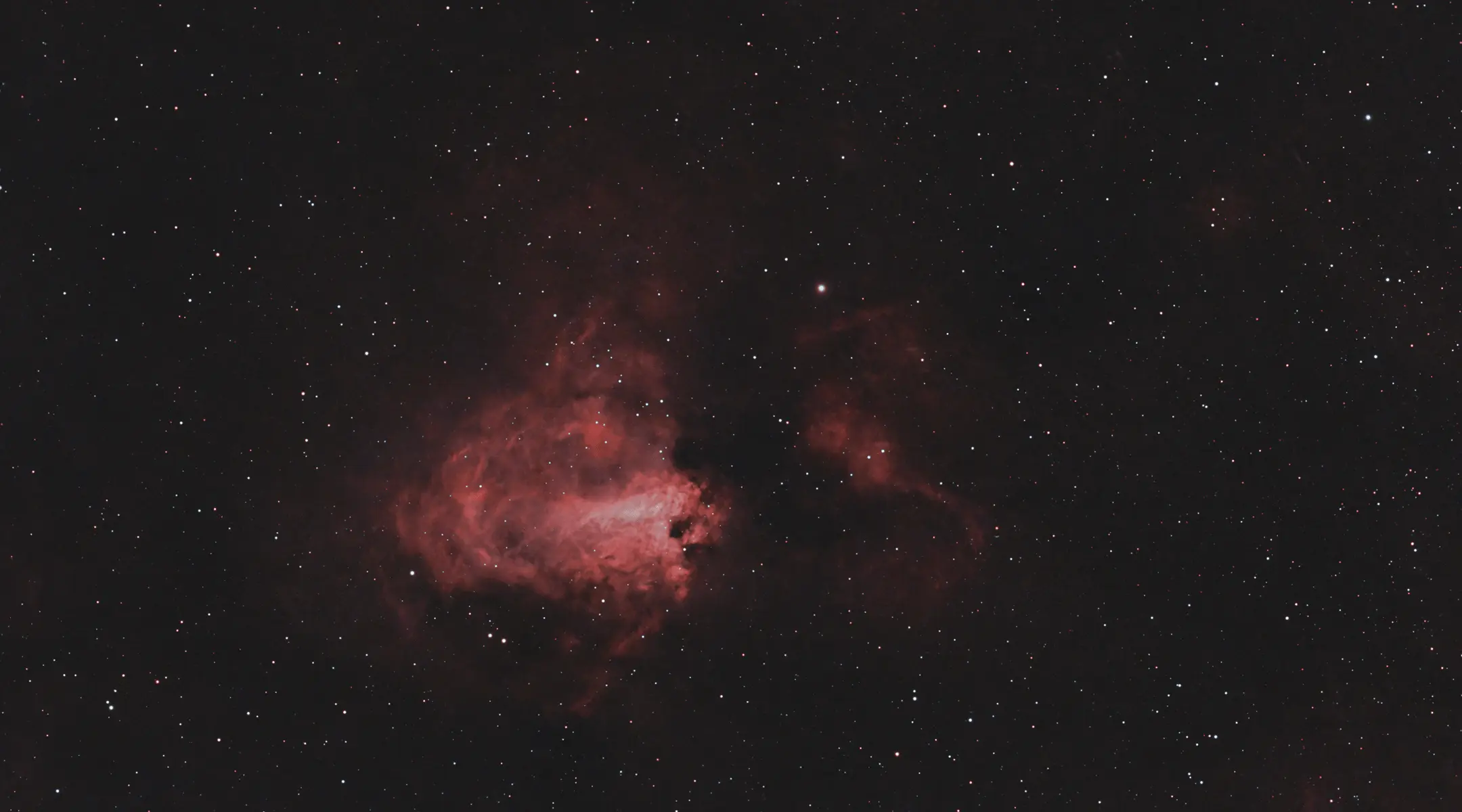
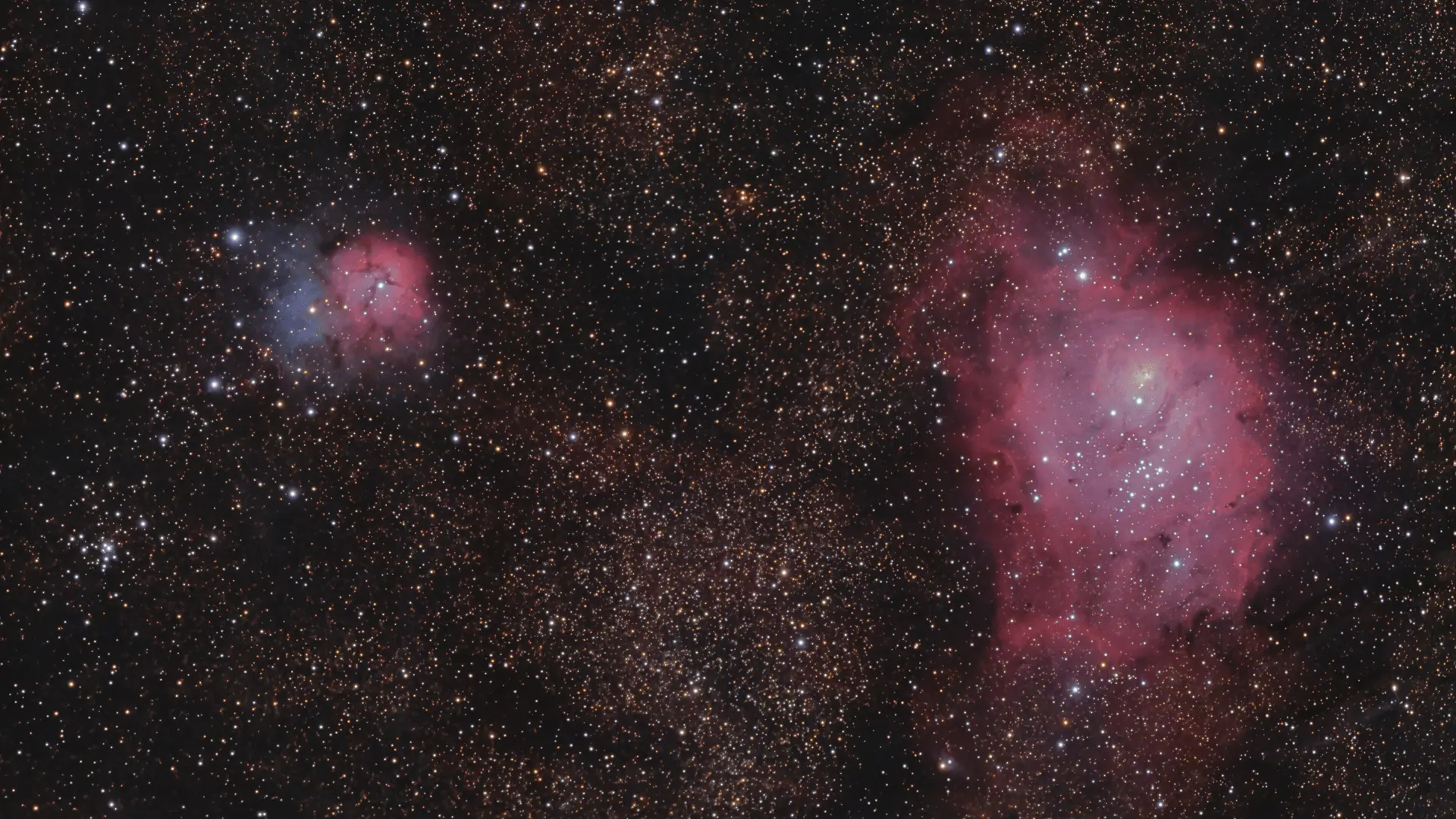
Hα + O III (both editions)
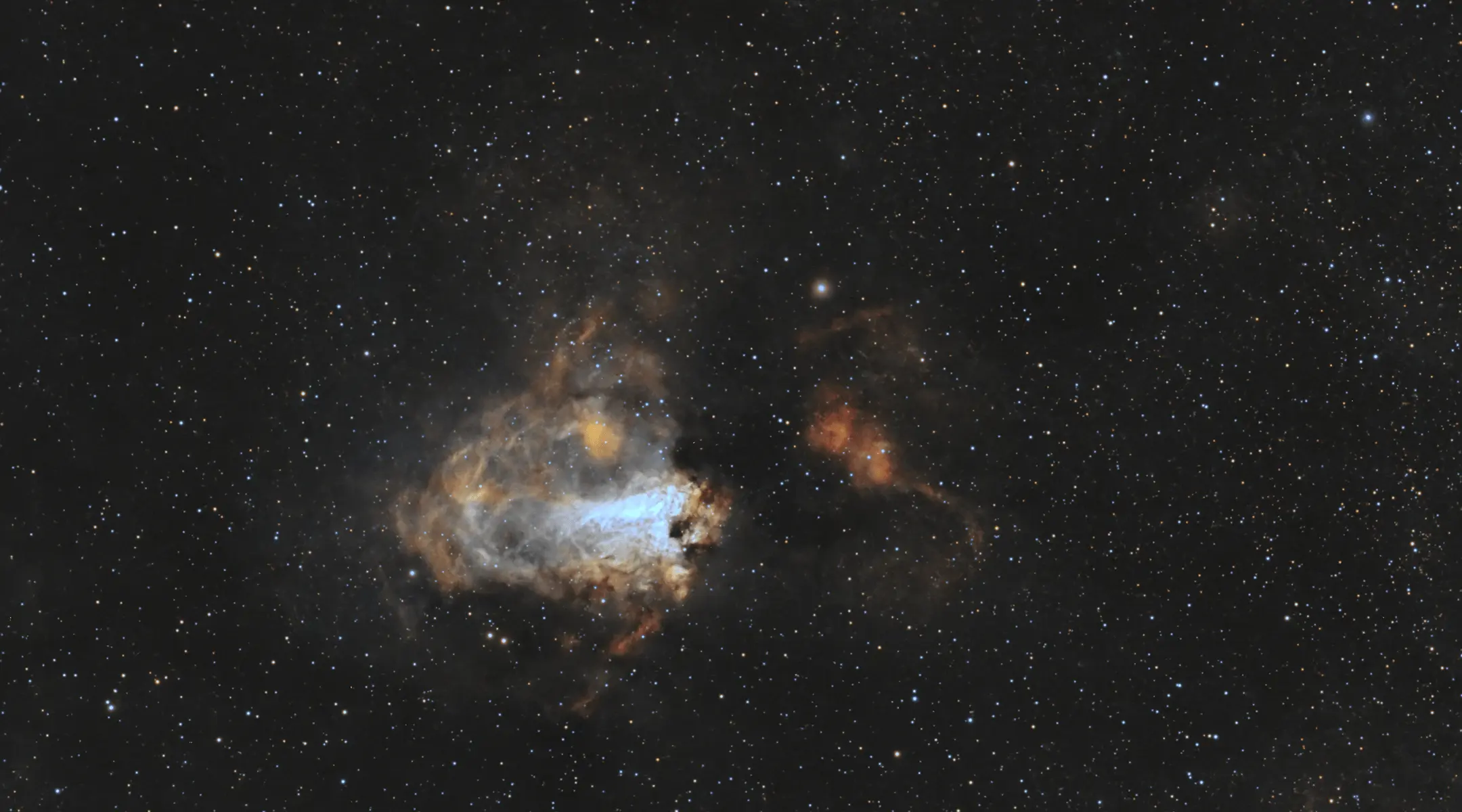
Hubble palette (SHO Edition only)
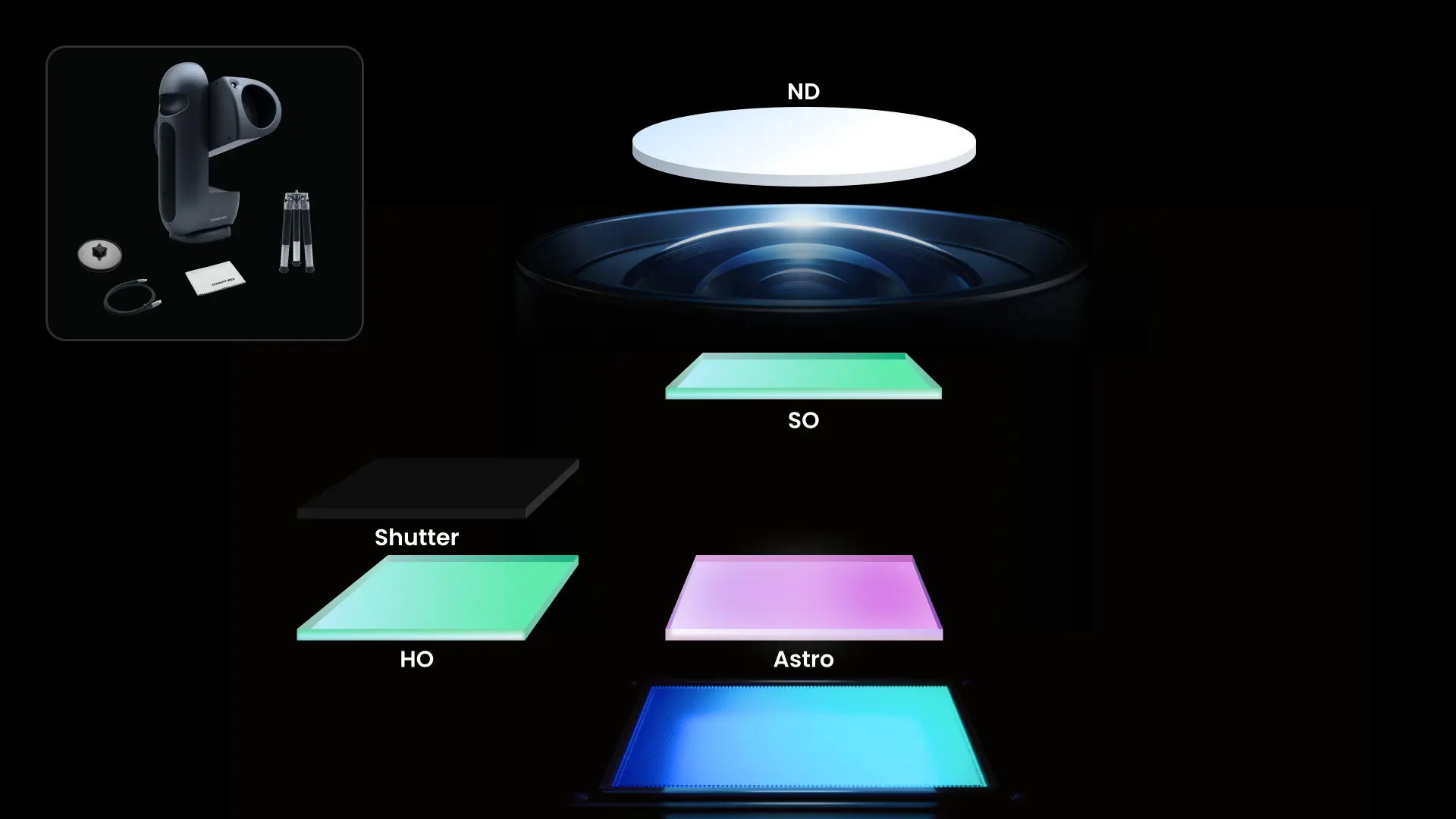
Our recommendation: if you mainly photograph nebulae or live under light-polluted skies, choose the SHO Edition. If you photograph many galaxies and want to image the Sun regularly without fitting a filter, the Standard Edition is the better choice.
The app – from your very first night
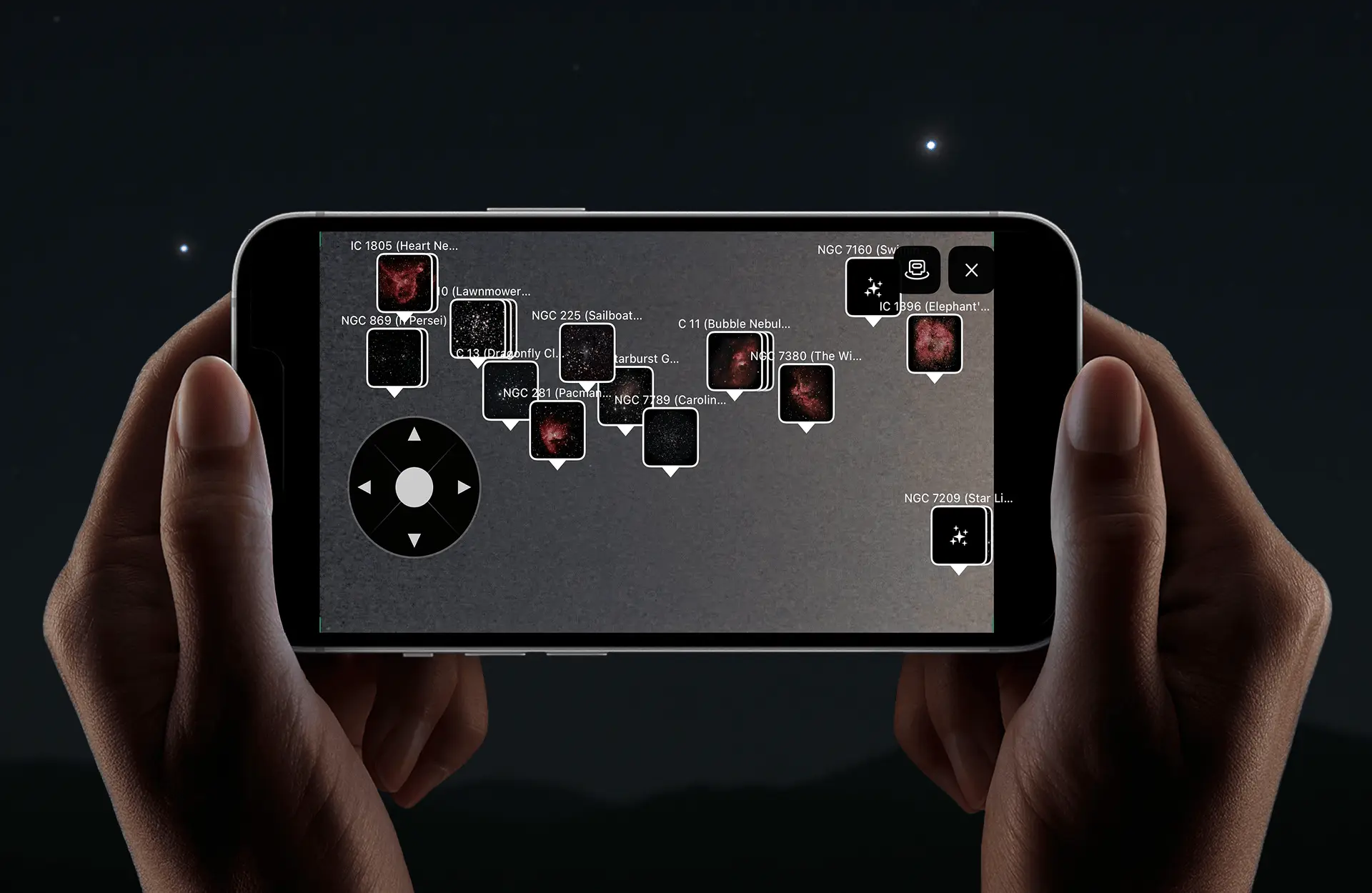
- AR sky finder and star atlas: hold your smartphone up to the sky, tap an object – the Draco slews to it.
- Auto mode: all settings automatic. Pro mode: full control over exposure, gain and filters.
- Schedule: plan imaging sessions in advance – the Draco starts on its own.
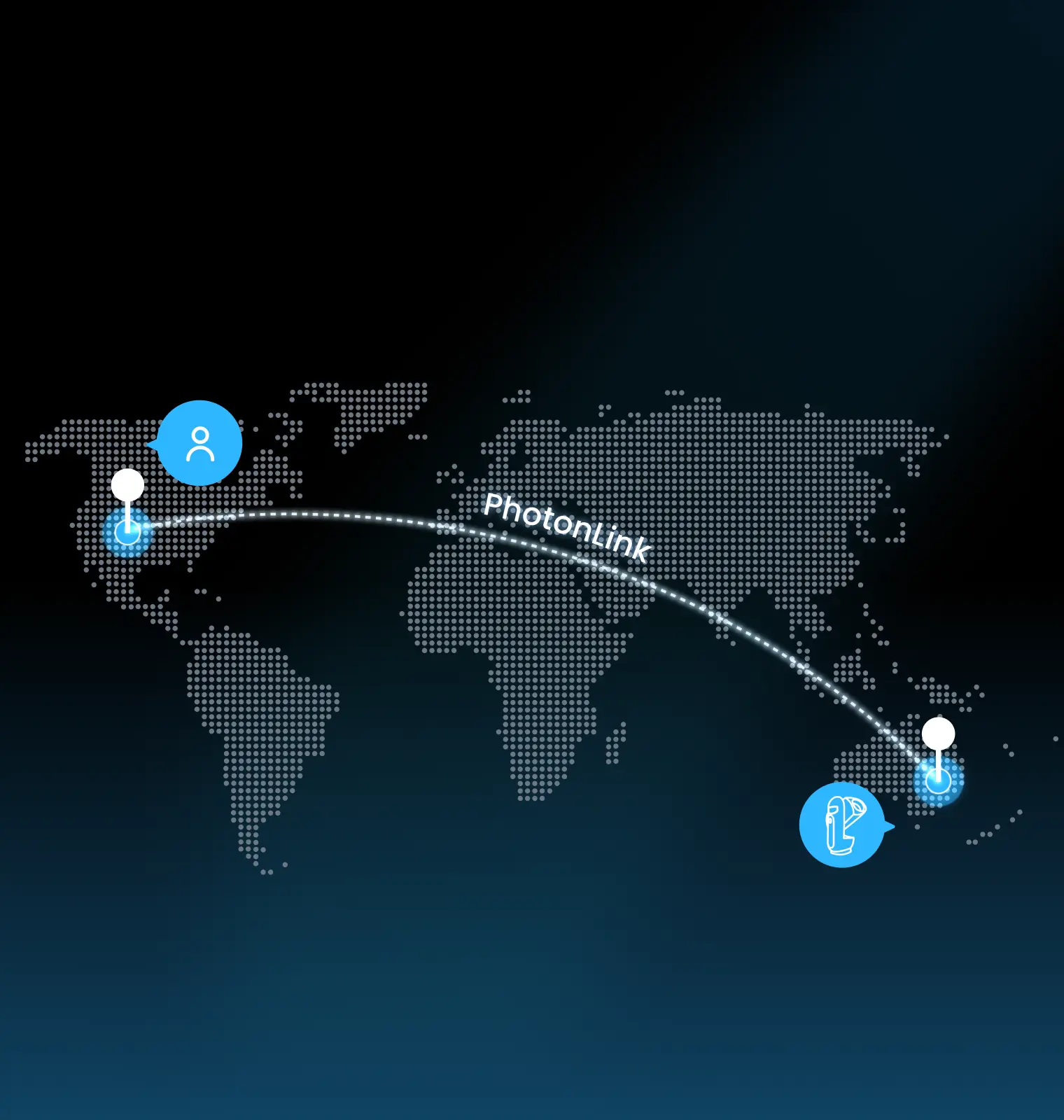
- Remote control: set up the Draco at a dark site and operate it from elsewhere.
- Mosaics for large objects and stacking across several nights.
- Editing: reduce stars, noise reduction, colours – directly in the app. Raw data as FITS and TIFF for your own software.
Standard Edition
SHO Edition
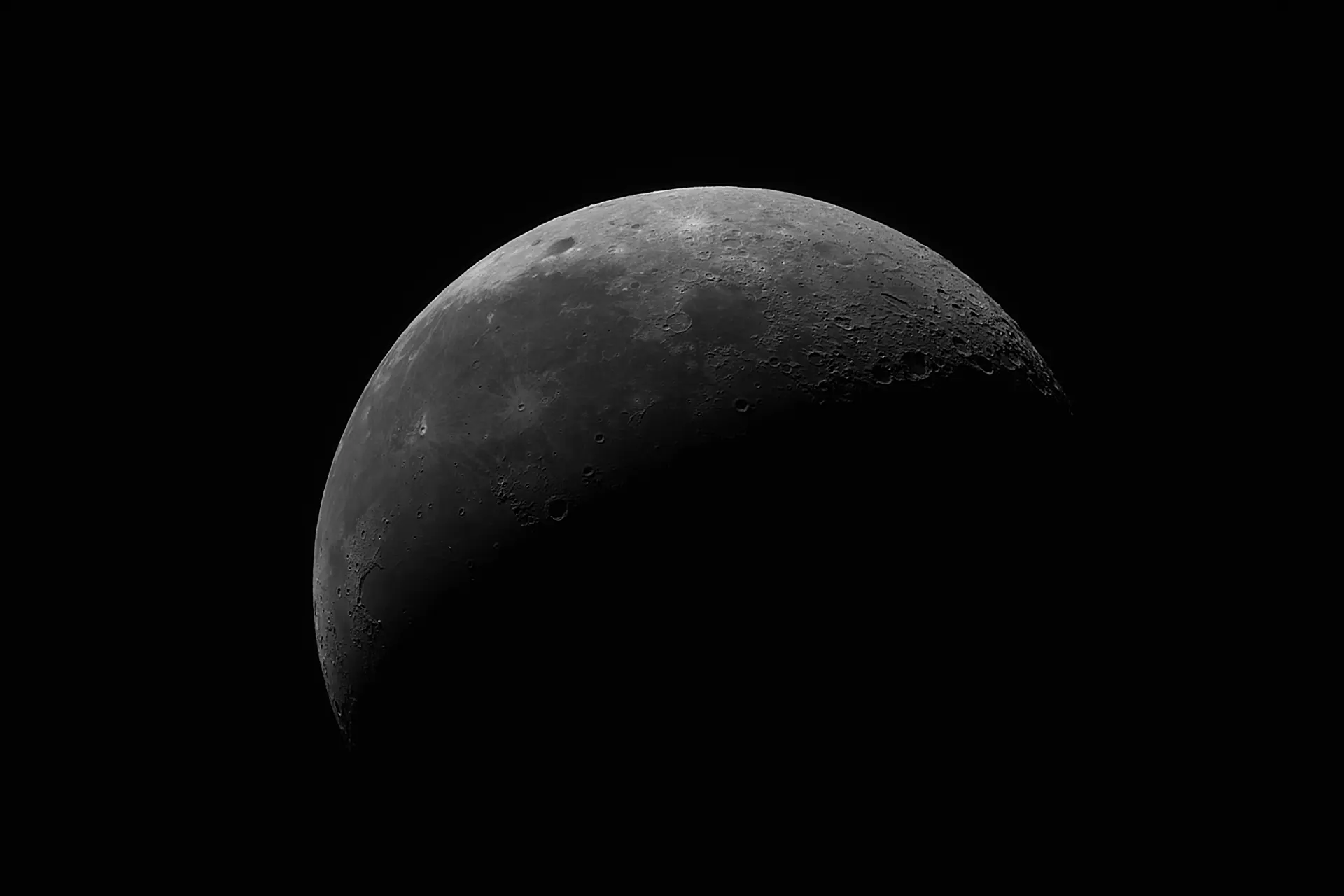
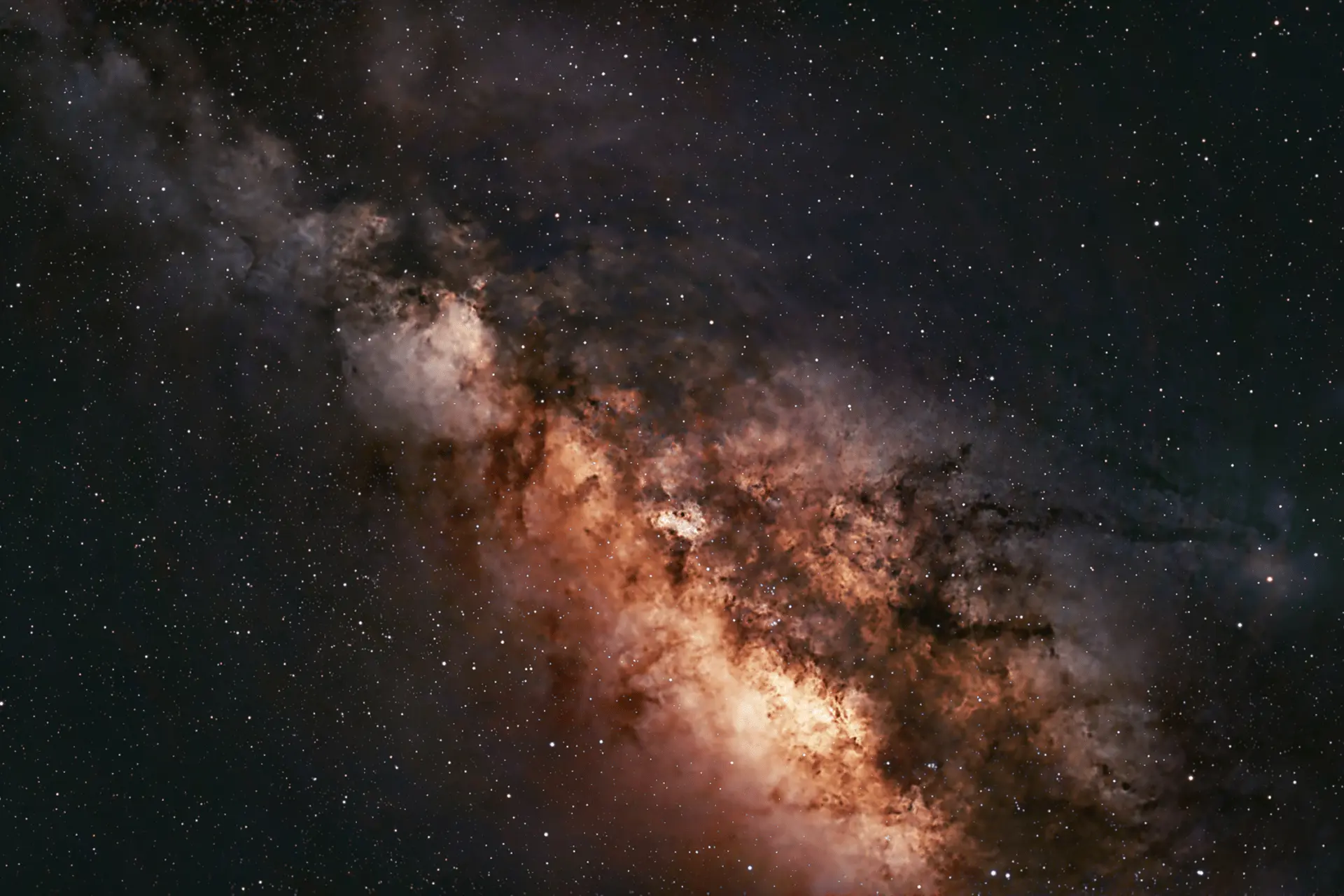
Sun, Moon and Milky Way
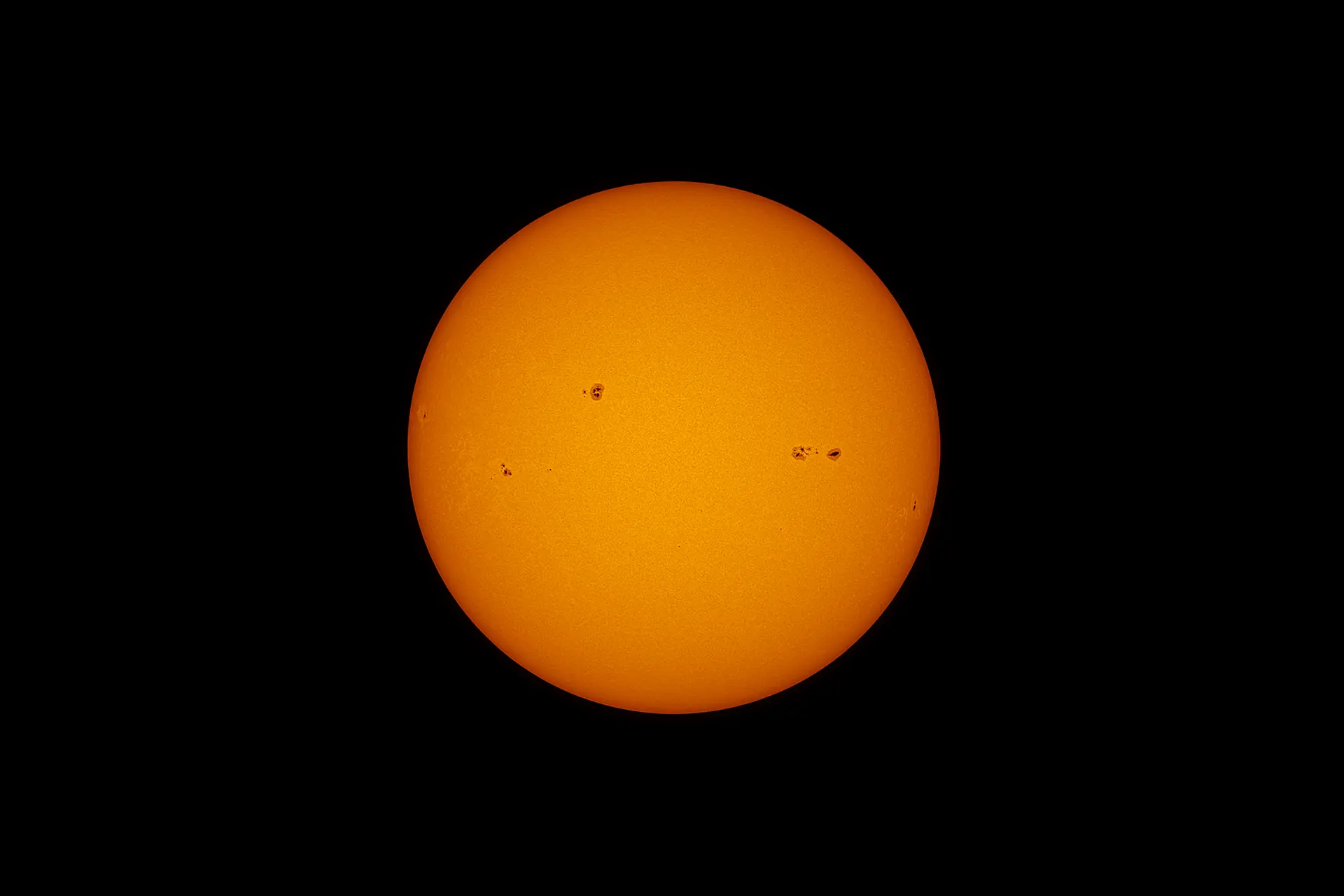
!!! SAFETY WARNING: Solar imaging only with a solar filter! On the SHO Edition, the magnetic ND filter must be attached before the Draco is pointed at the Sun. Never look at the Sun without a tested solar filter. The manufacturer recommends avoiding solar imaging around midday in high summer.
On the go
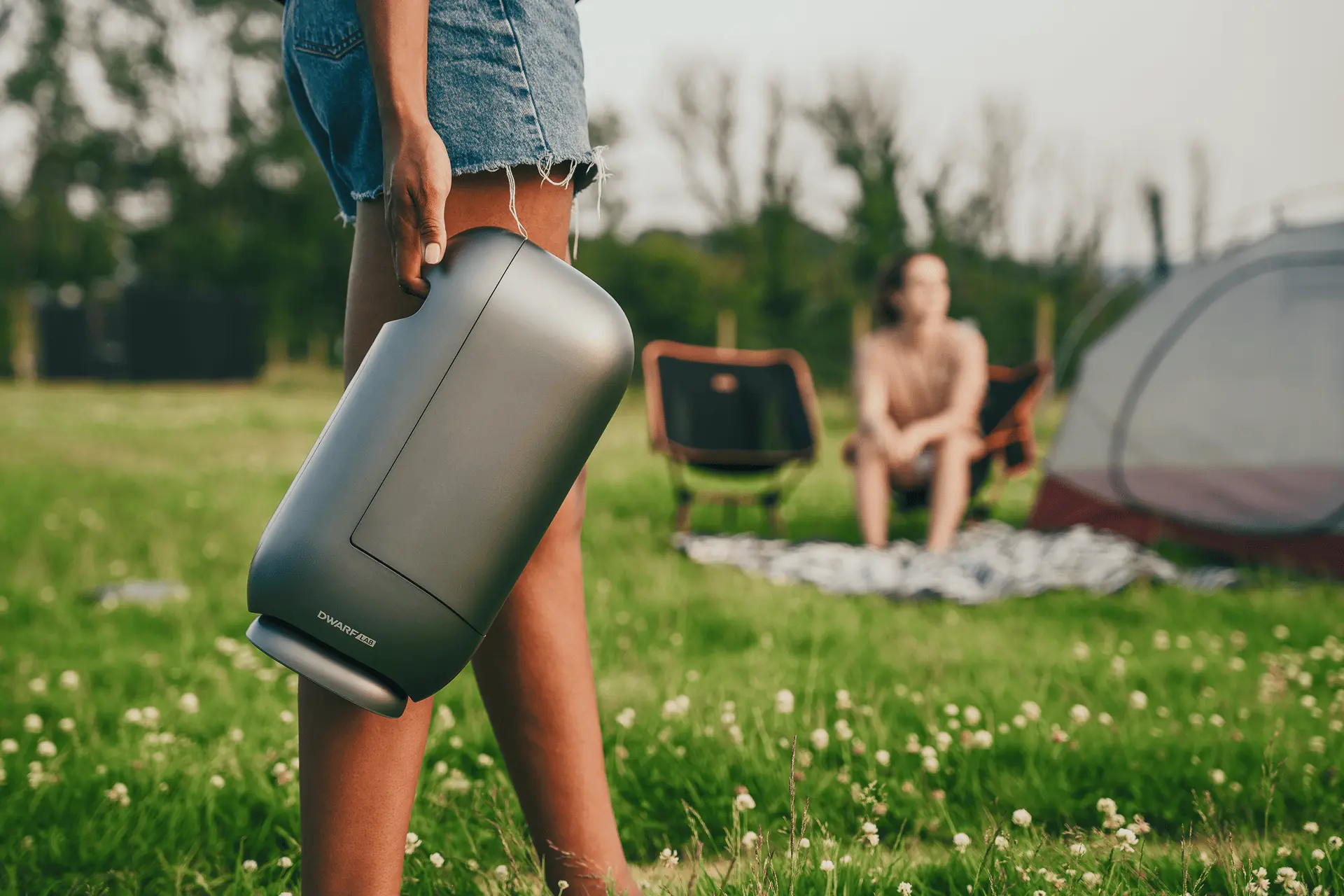
At 5.5 kg and with compact dimensions, the Draco fits into any car boot. The housing is rated IP55 against dust and water jets. The supplied aluminium table tripod is only 27 cm long when folded. Using the 3/8" thread, the Draco can also be mounted on a sturdy photo tripod.
The built-in battery lasts approx. 5 hours. For whole nights, the Draco can be powered via USB-C from a power bank or mains adapter.
Draco or Seestar S50 Pro?
| DWARFLAB Draco | ZWO Seestar S50 Pro | |
|---|---|---|
| Aperture / focal length | 90 / 340 mm | 50 / 260 mm |
| Focal ratio | f/3.8 | f/5.2 |
| Light-gathering area | approx. 3.2× | 1× |
| Resolving power (theoretical) | approx. 1.3″ | approx. 2.3″ |
| Single exposure | up to 300 s | approx. 10 s (alt-az), 30 s (equatorial) |
| Wide-angle camera | yes, 85.7° | yes, 63° |
| Weight | approx. 5.5 kg | approx. 2.8 kg |
The Seestar S50 Pro is lighter, more affordable and an excellent way to get started. The Draco is for anyone who wants more detail, shorter total exposure times and long single exposures – or who wants to step up from the Seestar.
Good to know
- The Draco is a purely photographic instrument. You view the image on a smartphone, tablet or screen – there is no eyepiece.
- The field of view is approx. 1.65° × 1.24°. Very large objects such as the Andromeda Galaxy or the North America Nebula can only be captured using the mosaic function.
- The Draco is only of limited use for planets: at 340 mm focal length, Jupiter and Saturn appear small. For planetary detail, a traditional telescope with a long focal length is the better choice.
- The Draco largely handles image processing itself. This is convenient, but you cannot follow every step in detail. If you want full control, save the raw data (FITS/TIFF) and process it yourself.
- Galaxies and star clusters benefit greatly from a dark site. Under urban skies, the narrowband filters show their strengths on emission nebulae.
- Equatorial mode is recommended for objects near the zenith.
Frequently asked questions
Do I need any previous experience?
No. In Auto mode the Draco chooses all settings itself. If you want to go further, Pro mode gives you every option.
Do I need the SHO Edition for galaxies and nebulae?
No. The Standard Edition is suitable for most targets, including emission nebulae with the Hα + O III filter. The SHO Edition additionally captures genuine sulphur data (S II). The "Hubble palette" in the app's editing tools only assigns new colours to existing data – that is not the same thing.
Do I have to align the Draco with the Pole Star or set it up perfectly level?
No. In normal (alt-azimuth) operation the Draco aligns itself. Equatorial setup is only recommended for objects near the zenith; the app then guides you through the setup.
Are 300-second exposures always possible?
300 s is the maximum single exposure. What makes sense in practice depends on sky brightness, the object's altitude, wind and setup. Under light-polluted skies, shorter exposures are often better.
Does the Draco work in the city?
Yes, especially for emission nebulae with the narrowband filters. Galaxies and star clusters work considerably better under dark skies.
Can the Draco photograph the Sun safely?
Yes, but only with the correct ND solar filter. On the Standard Edition, the built-in filter swings in automatically. On the SHO Edition, the supplied magnetic filter must be securely attached before the Draco is pointed at the Sun. Never point the Draco at the Sun without a solar filter.
Does the Draco produce 50-megapixel images?
No. The sensor has around 50 MP, but for astro images every 4 pixels are combined. Images are therefore approx. 12 MP – with considerably less noise.
Can I process the raw data myself?
Yes. In addition to the finished images, individual raw frames can be exported as FITS, e.g. for PixInsight, Siril or Photoshop. Transfer to a computer is via USB cable or over the network (FTP).
How much is the sensor cooled?
The Draco features TEC sensor cooling (thermoelectric cooler with fan) with automatic thermal control. It lowers the sensor temperature by approx. 5 °C below ambient. A target temperature cannot be set.
Does the Draco need collimating?
No. The optics are collimated at the factory and cannot be adjusted by the user.
How long does the battery last – and can it run longer?
Approx. 5 hours in astro mode, depending on temperature and use. Via USB-C the Draco can be powered from a power bank or mains adapter (up to 36 W). The battery is built in and can only be replaced by the manufacturer.
Can I take the Draco on a plane?
The battery is rated at 77 Wh, below the usual 100 Wh limit. However, rules vary between airlines – please check with yours beforehand.
Is the Draco weatherproof?
The housing is rated IP55: dust-protected and protected against water jets from any direction. Dew, splashes or a sudden shower will therefore not harm it. It is not waterproof in the sense of immersion – in persistent rain it should be covered or packed away.
Can I use a different tripod?
Yes, as long as it has a 3/8" or 1/4" thread and can safely carry 5.5 kg.
Do I need an internet connection?
No. Your smartphone or tablet connects directly to the Draco. Only remote control via PhotonLink requires internet access.
Is there software for Windows or macOS – or support for NINA and ASCOM?
Not at present. The Draco is controlled exclusively via the app for iOS and Android. There is no support for NINA, ASCOM or INDI yet.
Is the Draco suitable for permanent operation, e.g. in a garden observatory?
Yes, with a permanent power supply, a stable network and a weather-protected location. After a power cut, the Draco can restart automatically if this is enabled in the app.
Questions about the Draco? We are happy to advise you personally: via our contact form.
